How saving 10–15% for retirement strengthens your financial future
Saving 10% to 15% of gross income, which is your earnings before taxes and deductions, is one of the most effective ways to build lasting resilience for your financial future. While national retirement systems and workplace pensions can replace a baseline of your income, their eligibility rules, qualifying ages, and payout amounts can change over time. Building your own dedicated savings can help ensure that a significant portion of your future income remains anchored directly to your personal decisions, giving you control over when and how you retire.
What saving 10% to 15% can deliver in retirement
When you retire, expenses like daily commuting, payroll taxes, and saving for retirement itself drop away, meaning you will not necessarily need 100% of your paycheck to enjoy the same lifestyle. That is why financial planning benchmarks frequently suggest having enough savings to replace 70-80% of your pre-retirement income.
Starting early and saving within the 10% to 15% range can do the heavy lifting required to reach that target.
For example, consider someone earning a steady $60,000 salary who commits to saving 15%, or $750 each month, beginning at age 25. By age 65, assuming a constant hypothetical 7% annual return and no salary increases, those savings could reach approximately $1.97 million. Using a hypothetical retirement withdrawal approach, those savings could provide a meaningful source of retirement income alongside any pension or other benefits. The amount and duration would depend on investment performance, inflation, and individual circumstances.
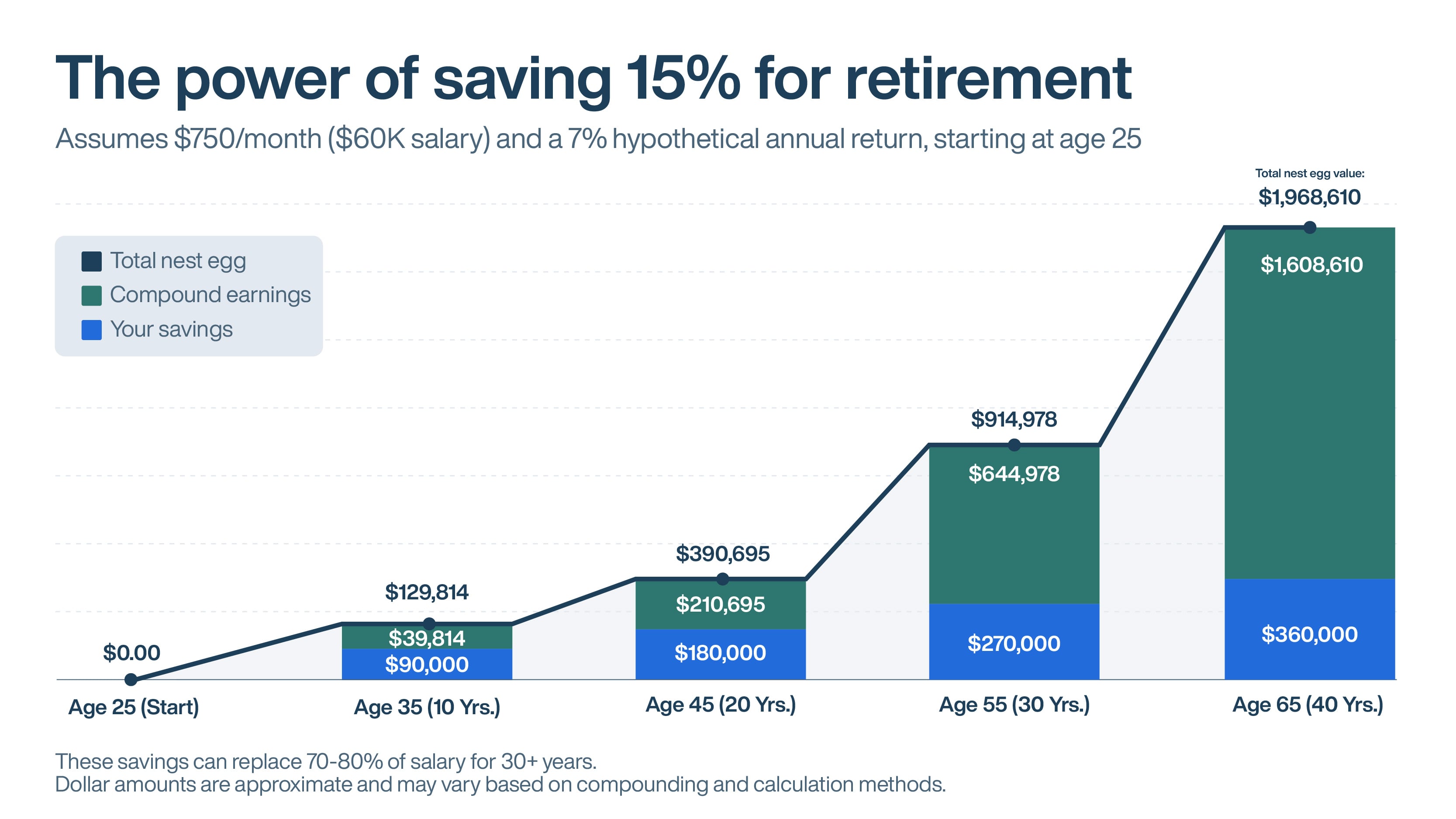
If you have workplace pension benefits or a national retirement program, these additional savings can provide an added cushion that may give you more flexibility and freedom in retirement.
How small steps build long-term momentum
Stepping up to a 10% or 15% contribution rate does not need to happen all at once. If you have not started saving for retirement yet, it is never too late to take the first step. See how you can start saving for retirement to build that initial momentum.
While saving 10% or 15% provides a strong foundation for many people, everyone begins from a unique starting point. Starting later in your career means compounding has less time to work, which might require a higher savings rate to reach your target.
Similarly, choosing to retire early or envisioning higher spending in retirement can raise the amount you need to accumulate. With these realities in mind, the best approach is to contribute what you can today and expand your savings steadily as your budget allows.
You can gradually build toward this milestone by turning small, manageable adjustments into lasting habits:
- Direct a portion of future salary increases or merit promotions straight into your retirement accounts before everyday spending adjusts to the higher pay.
- Reallocate money from paid-off debts into your retirement savings, so money that once went toward vehicle loans or credit card balances begins working for your future.
- Count any employer matching contributions toward your target percentage if your workplace offers a matching program.
How to balance retirement saving with life today
Building a secure future may require delayed gratification, and choosing not to spend everything you make today takes discipline. However, saving for retirement is not about depriving yourself of a fulfilling life today. It is about recognizing that your future self deserves the same dignity, security, and peace of mind you value right now.
While working toward 20% to 25% remains an option to accelerate your timeline, committing to a steady 10% to 15% habit strikes a healthy balance, letting you live well today while building for tomorrow.
How UNFCU can help
- Investment services: Explore third-party options through Copper Financial. Availability depends on location and eligibility. Written materials are in English. Review services and disclosures.
- Share certificates: These term deposits grow your money at locked-in guaranteed rates over set periods of time. Explore share certificates.
- Compound savings calculator: Estimate how much your savings could grow using your contribution amount, timeline, and assumed rate. Use the compound savings calculator.
- Automatic transfers: Schedule recurring transfers between your UNFCU accounts through Digital Banking. Learn how to transfer between accounts.
You may also be interested in
How to choose between three to six months of emergency savings
The importance of paying off high-interest debt